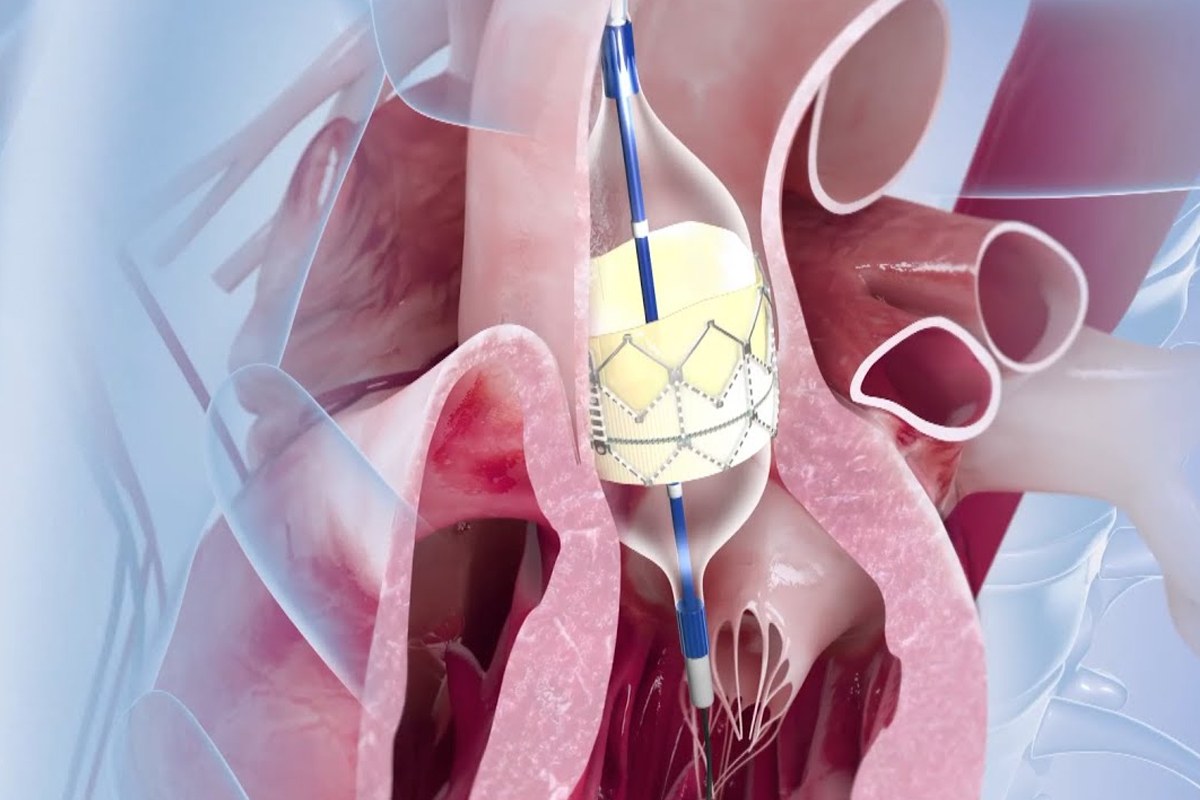
Theseare two different minimally invasive procedures used to treat heart valve diseases.
1. TAVI (Transcatheter Aortic Valve Implantation)
What it is: TAVI is a procedure used to treat aortic stenosis, a condition where the aortic valve in the heart becomes narrowed, limiting blood flow from the heart to the body.
A catheter is inserted into a blood vessel, usually in the groin, and is threaded through to the heart.
A collapsed replacement valve (made from biological tissue, typically from an animal) is delivered via the catheter to the aortic valve.
The new valve is then expanded inside the old, narrowed valve, restoring normal blood flow.
Why it’s done: TAVI is typically used in patients who have aortic stenosis and are at high risk for traditional open-heart surgery. It’s a less invasive alternative that allows for quicker recovery and less trauma to the body.
2. TMVR (Transcatheter Mitral Valve Replacement)
What it is: TMVR is a procedure used to replace a diseased or malfunctioning mitral valve. The mitral valve is the valve between the left atrium and left ventricle of the heart, and its malfunction can lead to conditions such as mitral regurgitation
(when the valve doesn’t close properly, causing blood to leak backward into the atrium) or mitral stenosis(narrowing of the valve).
Similar to TAVI, a catheter is inserted into a blood vessel (often through the groin) and threaded through to the heart.
A new, replacement mitral valve is delivered through the catheter and placed in the position of the old, diseased valve.
The new valve is usually deployed using a balloon or other means to expand it and fit snugly into place.
Why it’s done: TMVR is used for patients with severe mitral valve disease who may not be candidates for open-heart surgery due to factors like age, frailty, or other health conditions. It’s an option for treating significant mitral valve dysfunction without the need for open surgery.
Both procedures are minimally invasive, meaning they involve smaller incisions and use catheters to deliver and place the replacement valves, leading to faster recovery compared to traditional surgery.
TMVR is a procedure used to replace a malfunctioning mitral valve.Both procedures are alternatives to traditional open-heart surgery, offering less invasive options for patients with severe valve disease.